Episode Transcript
[00:00:01] Speaker A: Now, wait a minute. Now, wait a minute.
[00:00:03] Speaker B: So would you. Would y' all describe this show as a family yet? Have we done enough episodes?
Yeah. They say family isn't the family you're born in, but it's the family you choose. At least many Marvel movies have taught me this.
[00:00:15] Speaker C: It's. But actually, you know what. You know what family really is? It's the family you vote with.
Yeah, that's right.
[00:00:25] Speaker D: That's the family that votes together, sticks together.
[00:00:29] Speaker C: The family that votes together smokes together.
[00:00:34] Speaker D: That's right. That's in the Bible.
[00:00:35] Speaker C: That's in the Bible.
[00:00:37] Speaker B: This is your way of calling every state a union. A little bit inbred, and I respect that.
[00:00:43] Speaker D: Well, you know, colonizer states, they. They tend to not be the most diverse.
[00:00:47] Speaker C: There's a little bit of. A little bit of cousin kissing in those in your colonizer states.
[00:00:55] Speaker D: Yeah, well, yeah, amongst the colonizers. Yeah.
Unfortunate side effect, you know, but one
[00:01:00] Speaker C: thing you're not allowed to do is kiss in the voting booth. And that's something that I think we should change.
I think you should be allowed to kiss in the voting booth.
[00:01:12] Speaker D: I think that that could really help sway the election in the right direction.
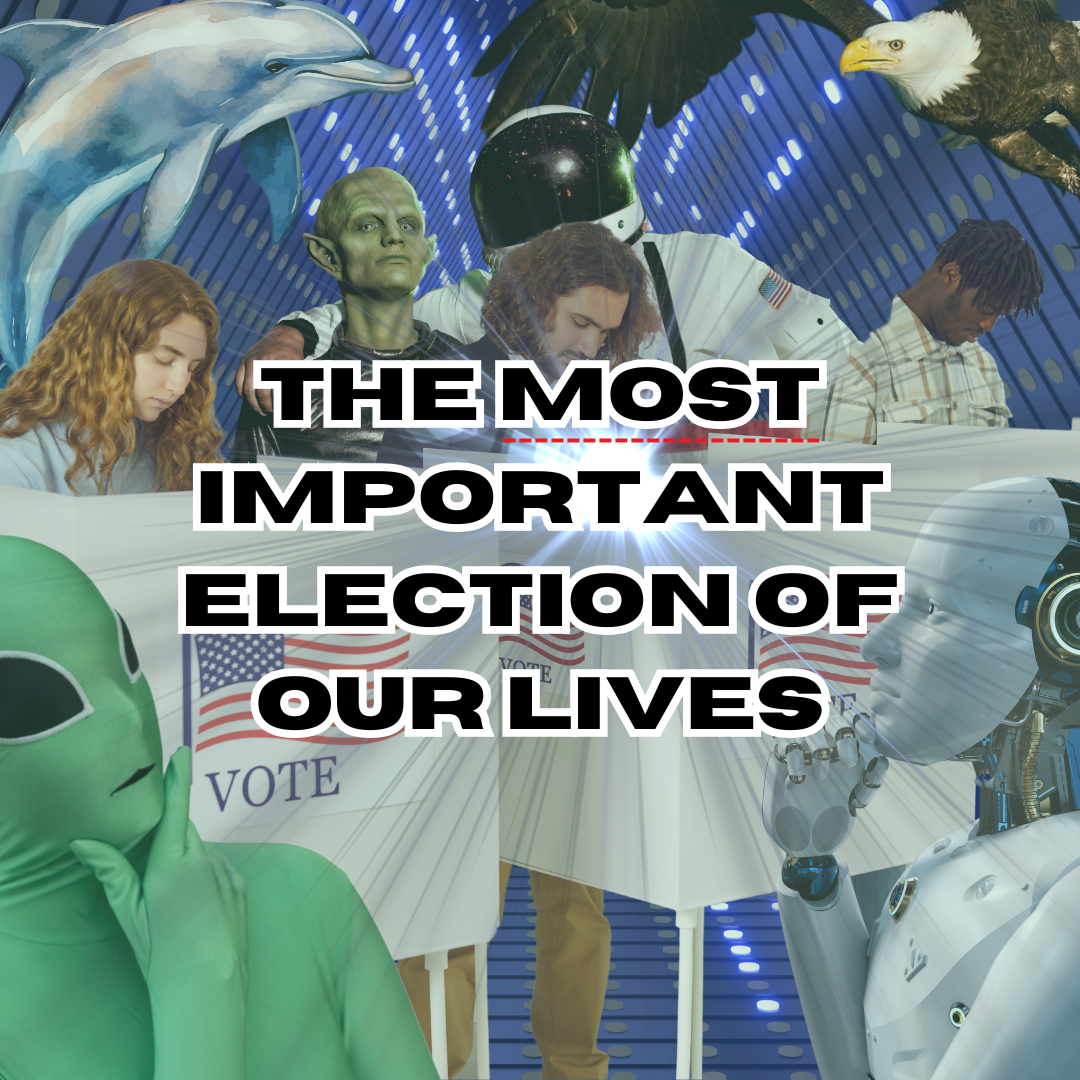
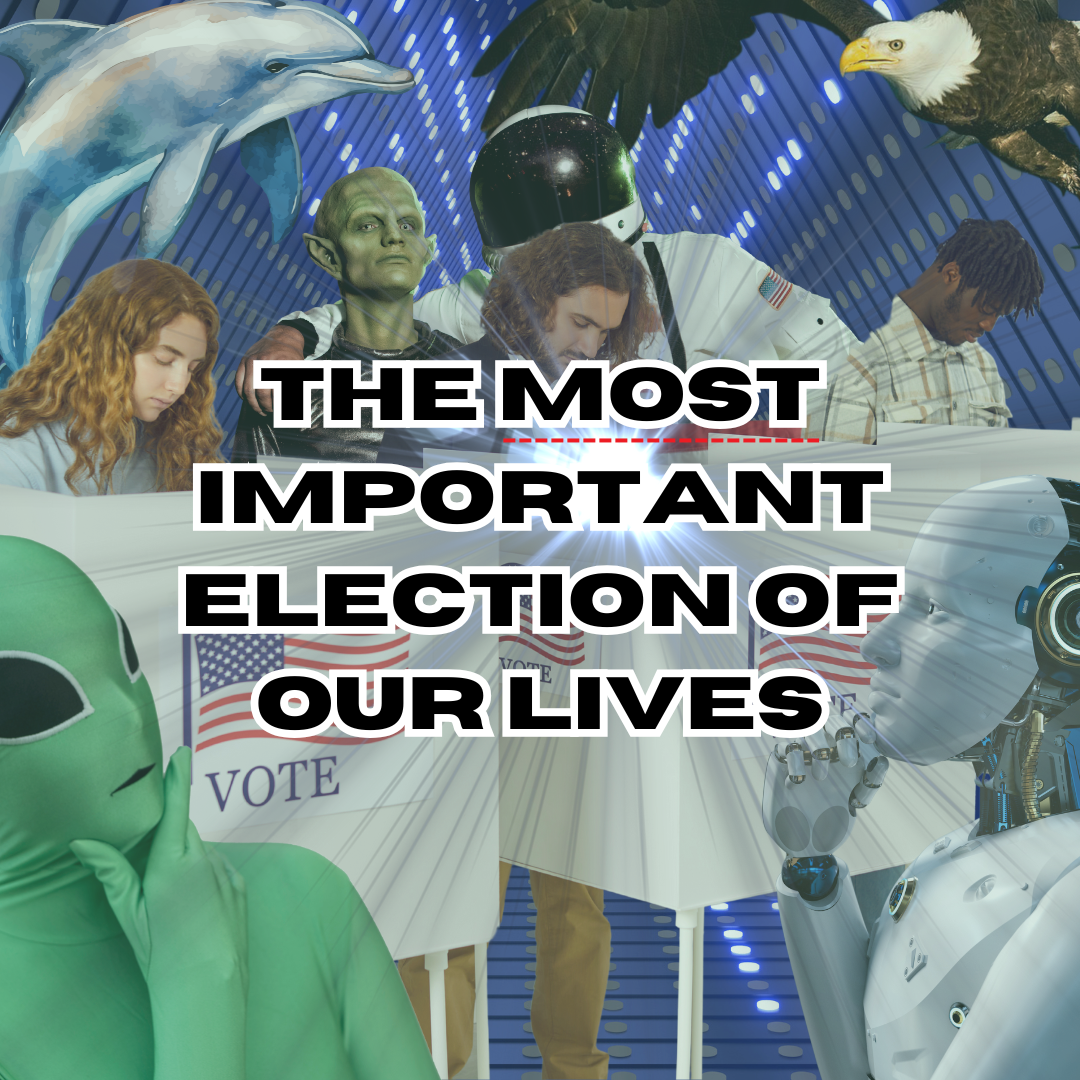
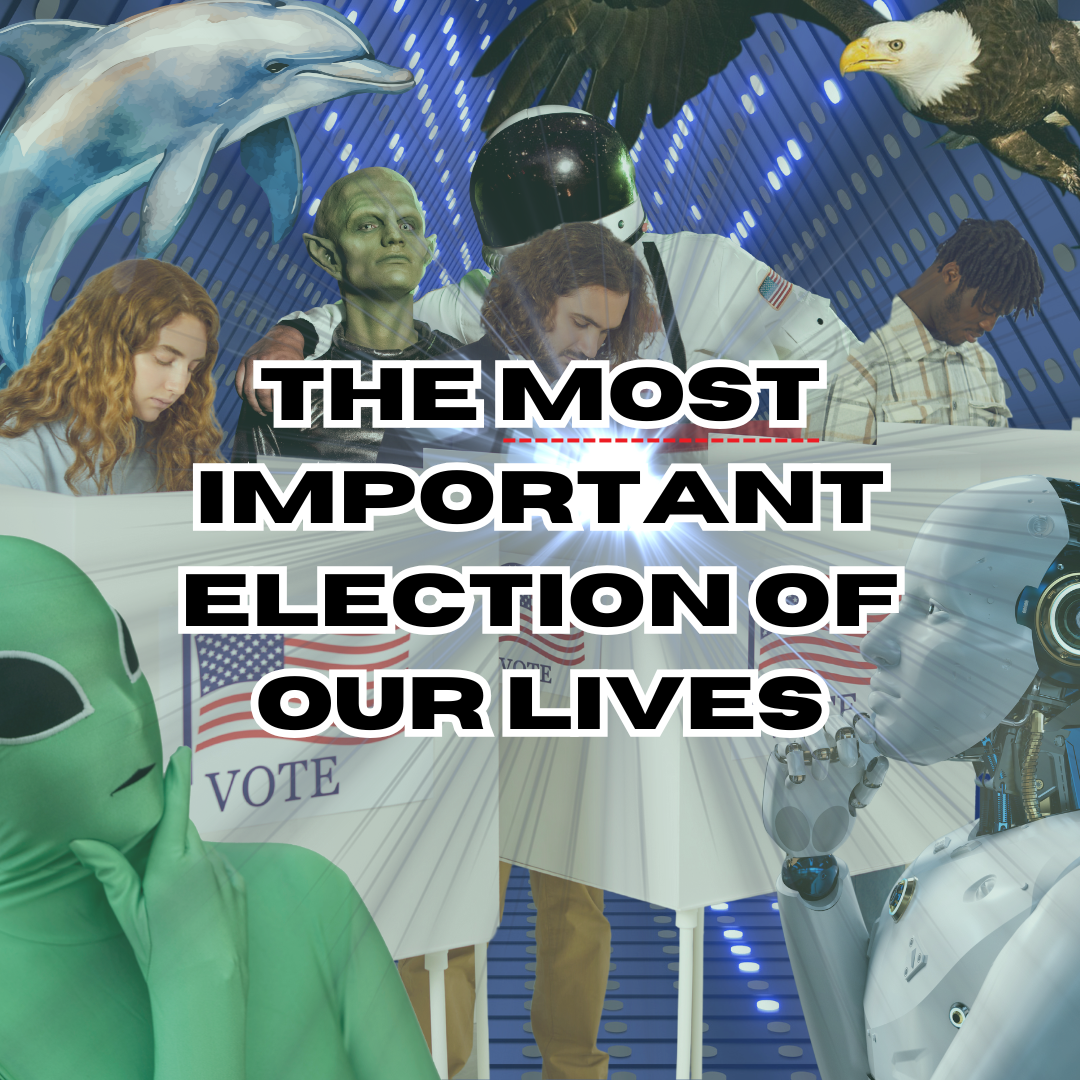
[00:01:15] Speaker C: I think it would help. I think, you know, people. The problem is, you know, people right now, they keep forgetting that this is the most important election of their lives, but it is. It's the most important election of our lives. Once again, it is that time. And people out there, they're. They're not engaged. So I think. I think if you added some. Some. Some romance, some sex to the voting booth, that's how we're gonna get people to get the out and vote. It's time to vote. It's time to vote. It's the most important election.
Have to vote this election, which will be, I do truly believe, the most important election of our lifetime.
[00:01:59] Speaker A: This is the most important election of our lifetime.
[00:02:03] Speaker C: This is the most important election.
[00:02:05] Speaker A: Don't you. You hear that?
[00:02:07] Speaker B: This is the most important election in our lifetime.
[00:02:11] Speaker C: I certainly think it's the most important
[00:02:12] Speaker D: election of my lifetime.
[00:02:14] Speaker C: This is the most important election of our times.
[00:02:18] Speaker B: Politicians say every time. This is the most important election. This one's really that important.
[00:02:23] Speaker A: Let's make babies in the voting booth.
[00:02:26] Speaker C: Let's make a baby right now.
[00:02:31] Speaker A: Wait a second.
[00:02:32] Speaker B: What else can you wait for? What else do you need to get in the mood here?
[00:02:37] Speaker C: We've already got Sonic the Hedgehog that says,
[00:02:42] Speaker A: I'm thinking I won't. I don't want to vote today. I Don't think I want to vote today.
I know this is out of character for me, but I don't think I want to vote today.
[00:02:51] Speaker C: You see what's going on in the world right now? You looked at the news and you thought, I don't need to vote. That's what I'm hearing right now. That's what I'm hearing right now.
[00:03:03] Speaker A: Fine, I'll vote.
[00:03:05] Speaker C: I'll fucking vote. You kick your ass in here and you vote. It's time to vote. It's the most important election of our lives. I'm Kennedy Cooper, as always here, holding it down. We've got also my friend Brandon Buchanan. Brandon, say hi.
[00:03:20] Speaker B: Hi.
[00:03:21] Speaker C: And we've got of course, Andrew Fields, our in house statistician who is also your friend.
[00:03:26] Speaker A: Right, right.
Okay, fair enough.
[00:03:30] Speaker C: We'll discover that over the course of this episode. Okay. Or maybe many episodes from now. Maybe that's the contents of the one piece.
[00:03:39] Speaker A: And no, Kennedy, I am not the one piece.
[00:03:43] Speaker C: No. Our friendship. Our friendship.
[00:03:45] Speaker A: Oh, that is also not the one piece, you son of.
[00:03:49] Speaker C: We have a guest today. We have wonderful.
[00:03:51] Speaker D: Hi, all.
[00:03:52] Speaker C: Wonderful, delightful guest. Acclaimed shit poster. Long time fan of your posts. First time talking to you, not through the medium of microblogging. We've got Sage here.
[00:04:06] Speaker A: Yeah, Sage, hello.
[00:04:09] Speaker D: You probably don't remember, happy to be here. Happy to be booting.
[00:04:14] Speaker A: You probably don't remember this because it was a long time ago, but you put me on a wild card starter pack along on Blue sky and I've gotten a lot of people just finding the statistician guy posting on their feed. Thanks.
[00:04:28] Speaker D: You're welcome. I like that. We could talk about psychology, stats. It was very fun. It was a great convo.
Numbers, numbers. They're good folks.
[00:04:38] Speaker C: When we say that Andrew is a statistician, but he is.
[00:04:43] Speaker A: I am. And I know enough about stats to know sometimes if you look at stats, if you look at the way we do things and you're like, that doesn't make sense. I must not be smart.
In reality, you are smart because you recognize that it does not make sense.
[00:05:03] Speaker C: Oh, I see how this works.
[00:05:06] Speaker A: It's messy. It's very messy. But it's not about me today. It's about our friend Sage.
[00:05:11] Speaker C: Sage, you're the maker of great posts. The maker of some great T shirts and hats. Do you want to plug.
You want to plug yourself to the people out there? Because, you know, I find that not everybody listens all the way to the end of the show.
[00:05:24] Speaker D: Sure. Hello, my name is Sage. Also sometimes Salvia.
I am a writer, artist, tech alchemist, and a cyber goth Combat doll is another way I guess you could put it.
I spend a mild job. Right. It's a good. It's a good career. You know, it's a living.
Yeah, you can find me at.
@Trans BlueSky Social and then on most other platforms, I'm at Col Combat Doll and a lot of my art is available at transgender gay1 URL.
[00:06:07] Speaker C: Wow, that is an incredible.
[00:06:09] Speaker A: Transgender gay. It's not dot com.
[00:06:13] Speaker B: And really only admire your commitment there.
[00:06:16] Speaker D: I was shocked when it was available and I immediately purchased the domain.
[00:06:20] Speaker A: No, I get what you. You're saying. When we started this podcast, I'm shocked that the most important election of our lives was not taken.
[00:06:28] Speaker C: You would really think there would already be a podcast name this. But nope, we got it. It's ours for some reason.
Well, welcome to the show.
You kind of gave us a confusing set of possible topics.
[00:06:44] Speaker D: Oh, yeah. I was very drunk when I sent that.
It was like. It was like 11pm on a Saturday night. And I just. I just started. Just started sending topics off the top of my head.
[00:07:03] Speaker C: Yeah. You know, sometimes people send us a topic that's very obvious and straightforward and just a clear. A clear thing. We can write an episode around right away.
Sometimes we get some topics that we have to scratch our heads on a little more. I'm not going to lie. We had to think about this episode a little bit.
[00:07:24] Speaker D: Well, I'm glad that I've presented a challenge for y'. All.
[00:07:28] Speaker C: You did. However, we're always up for the challenge here.
[00:07:31] Speaker D: The dialect.
[00:07:33] Speaker C: We. We. We can't be stopped. And so, you know, we did have to think, because you kind of gave us this list that was like, we could talk about bondage or anime maybe, or the government collapsing. And we were like, oh, okay.
[00:07:50] Speaker D: Did I mention. Oh, I think I mentioned Digimon? Yeah, I do like Digimon. That's fair.
[00:07:54] Speaker C: And that was. See, the unfortunate thing there is. That was one of your easiest things that you threw us as, like, a bone in that message. But we've done a Digimon episode pretty recently. We're not against doing episodes more than once, but we were just, like, struggling. Like, can we come up with another interesting thing for Digimon? We kind of just did this, so it's completely reasonable.
[00:08:16] Speaker D: It's a. It's a very comprehensive topic. And also, you know, variety is the spice of life.
[00:08:21] Speaker C: It is.
But one thing that you did mention a little bit. Well, kind of indirectly, we kind of we kind of extrapolated this from a lot of the topics you mentioned.
[00:08:32] Speaker B: I think garlic is the spice of life, by the way.
[00:08:37] Speaker D: Garlic and Habanero.
[00:08:38] Speaker C: Yeah, yeah, those are solid choices.
[00:08:41] Speaker B: That's a great team.
[00:08:42] Speaker C: You can go far with that team.
[00:08:43] Speaker B: Sorry to step on that, like, four seconds behind rhythm there, but it was just worth it. Shout out to Garlic. We love you.
[00:08:50] Speaker C: Shout out to Garlic.
Big, big fans of Garlic on this show. We are sponsored by Garlic Garlic.
[00:08:55] Speaker A: Only four to five people on this podcast support Garlic.
[00:08:59] Speaker C: Boo.
[00:08:59] Speaker A: Garlic.
[00:09:01] Speaker C: You can't say that anymore. We got the Garlic sponsorship now.
[00:09:05] Speaker A: Hooray. Garlic. I'm a sellout.
[00:09:12] Speaker C: We're in the pockets of big Garlic.
Go, go plant some garlic. That's what our sponsors want you to do.
[00:09:21] Speaker D: Your sponsor is just literally a giant clove of garlic.
Garlic.
[00:09:26] Speaker C: Yeah.
But, yeah, so you gave us a lot of topics that we noticed kind of revolved around the sort of the nuclear family and the rejection thereof in various ways.
And we thought that that might be kind of an interesting place to take the episode today would be in a sort of Emily Abolition type direction. Right. What, what, what are the new families of our future going to look like? What aspects of the family structure have maybe let us down?
So what do you, what do you. What do you think about the family structure? Sage, where do you stand on. On two kids and a. And a half a dog or whatever?
[00:10:11] Speaker D: Yeah, I think that the. Throughout my life, what I have noticed is that family is shared experiences. It is not genetics.
And also the concept of the nuclear family is a very recent invention that I don't think is particularly well suited for humanity. I think it's very well suited to make sure. To making sure everybody gets.
Everybody buys a car and a house and a fence and lawn supplies. But I don't think it particularly promotes happiness or community or sustainability.
So I'm personally not a very big fan of the. Of the nuclear family.
It's one of those things where, you know, if a conservative starts getting really, you know, upset and they're like, oh, the, the queers, they want to. They're. They want to abolish the family. They want to, like, you know, dismantle our society. And I'm like, well, I mean, you could do whatever you want, but I don't want to live that way. That sounds awful. Why would I. Why would I want to live in the suburbs?
[00:11:15] Speaker C: The suburbs really are not so great.
Totally overrated.
[00:11:21] Speaker A: I'm just thinking about how my depression started when we moved from Nevada to the suburbs of Philly and yeah, suburbs suck.
[00:11:30] Speaker D: They're designed to isolate you. Suburbs are designed to alienate you from everyone you're surrounded by and to get you into the systemic habit of behaving like your own little landlord. And that causes all kinds of weird behavior in human beings. That is not particularly pro social.
[00:11:53] Speaker C: No, it's not. Yeah. So, you know, we're not here to say if you got into a hetero marriage and had a kid, you're the devil, but just, you know, why is that the only.
Why is that the only route that is considered socially acceptable by large groups of people? I think is a perfectly reasonable fucking question.
[00:12:12] Speaker D: That's very much how I look at it. Like, thank you for framing it that way. I think that a lot of the time, similar to, like, most people are familiar with. Oh, I'm getting on my bullshit. This is definitely one of my. The topics that I write a lot about.
Okay. But like, most people at this point are aware of, like, what comphet is, right? The compulsory heterosexuality of being expected to, like, oh, people are straight by default. And that causes a lot of issues because then people aren't just making a decision for themselves. They are just being handed a decision and told that's the only option or it's being presented as the only option.
So similar to that, I very much view. I very much view, along with comp hat, a couple of the other things that are just sort of like compulsory and encouraged by society.
For instance, compsys, comp. Monog.
There's all sorts of different things that just sort of get handed to you in a neat little package. And there are a lot of incentives for you to never question whether that is comfortable for you personally.
[00:13:23] Speaker A: Yeah, no, I definitely get that. I myself have questioned if I am gay. I have questioned, you know, what, if I'm a woman. And I have come to the conclusion that it is okay that I am a CIS man, but it's okay for me not to be a stereotypical muscle man.
[00:13:39] Speaker D: Exactly. There's so many different ways to. To exist. Right.
[00:13:45] Speaker B: I wish that you had more objectable takes here. Why don't. Why don't we say there's only one right way to exist and start yelling it for as it is now, we can only simply say, well, yeah, if
[00:13:57] Speaker D: you want me to adapt a character, I can do that.
I can give you. I can go and come back.
That's my evil twin who's like a bedtime Maoist or something.
[00:14:09] Speaker C: I really want. Bring it, though, is the thing. So I need you to Go. I need you to go, you know, study.
Study this character in depth for nine months.
I need you to do a residency.
I.
[00:14:27] Speaker B: No, no, no. Well, let's.
[00:14:29] Speaker A: No, no.
[00:14:30] Speaker C: These are great takes. And yeah, so I think that that compet. Ump. Cis. Comp.
Everything mentality that you're talking about, something that it bleeds into a lot, is a lot of media that we consume. And in particular, I feel that, you know, TV sitcoms are the sort of cesspool a lot of the time of the. Of the worst of this. Of this psychological warfare, you know, TV sitcom families.
[00:15:03] Speaker D: TV sitcoms are psyops. Is that what you're telling me?
[00:15:06] Speaker C: Maybe. TV sitcom families, you know, they often present themselves as being in some way, you know, something to look up to or aspire to in some aspect.
But the reality is that, you know, a lot of these TV sitcom families actually present extraordinary dysfunction and that people sometimes go on in life trying to replicate some of these things in real life. And that's not a recipe that ends well.
[00:15:40] Speaker A: Yeah, I just have my own life experiences and I'll just say my dad trying to replicate the whole recipe didn't really end up well for us. Would have been happier for us to be ourselves than try to follow this model.
[00:15:58] Speaker C: Yeah, I think that there's.
There's a lot of.
There's a lot of stuff that is quite negative about this experience for a lot of people. And again, these TV sitcom families, some of them really enforce this in a hyper negative way.
Now, some TV sitcoms subvert our expectations and make room for, you know, alternative thought or alternative lifestyle or things like that in a way that can feel. Feel good and representative.
[00:16:26] Speaker D: But I love alt thoughts, of course.
[00:16:30] Speaker C: But, you know, it's way too many TV shows kind of revolve around these families that, again, family situations that people might look at on the surface and think, oh, that's what I want, I want that. But if you really examine it, it's just obvious that nobody should actually want that.
[00:16:48] Speaker A: Question, does ACAP include these TV families?
[00:16:53] Speaker C: I don't know, but maybe we can figure that out together today.
So, Sage, what's your relationship to a. A TV sitcom families? Was there a. Was there a sitcom family that you were emotionally your emotional support. Sitcom family growing up? Oh, no, no.
[00:17:13] Speaker D: Yes. Yeah, there was.
Okay, so Modern Family is. Was one of them, for sure.
Oh, there was one that. Okay, there's like the old school stuff too, like I Love Lucy. Yeah, I grew up watching the Munsters, The Addams Family.
[00:17:34] Speaker C: We'll count those you know.
[00:17:36] Speaker D: Oh, there's a really fashy one my mom loved. That was awful. What was that?
Oh, that's gonna drive me nuts.
[00:17:45] Speaker C: I hated it.
[00:17:45] Speaker D: It was really, really bad. It was like. It wasn't Mommy's Little Helper, but it was like something like that. Like, that's the type of drug, but, like.
And a Rolling Stone song, but. Oh, my God, I'm not gonna. Yes, I, I, I've consumed a lot of. Of the American sitcom slop.
It's a really weird medium. I like Pulp, so, yeah, I'd say the one that I saw the most of my own family in was probably Modern Family growing up.
[00:18:15] Speaker C: Not the worst you could have picked.
[00:18:18] Speaker D: No, it's pretty. It's pretty good. Overall. It was. I gravitated to it specifically because of the queer characters in it, and it was one of the only shows that my evangelical Christian parents, who were very that's their own thing, would let us watch that was, like, positive, that didn't have negative portrayals of queer people.
[00:18:42] Speaker C: You know, I grew up in the era where you still just kind of turned on the TV and had five channels. Not that cable didn't exist in my time, but just, you know, did not always have access to that as a young person.
And what I find, you know, what I found interesting growing up was just how much random slop I watched that I would not have chosen to watch under any circumstances otherwise.
But you know what I found myself watching a lot when I was a kid was seventh Heaven. I mean, you had those.
The hot, the hot teens.
[00:19:23] Speaker D: Oh, my God.
[00:19:25] Speaker C: Really, really drew in a certain, A certain crowd.
[00:19:29] Speaker D: Oh, no, no.
[00:19:31] Speaker A: Kennedy, why. Why did you make me remember seven Heaven?
[00:19:35] Speaker C: You want to talk about a cursed. A cursed family? Yeah.
[00:19:37] Speaker B: Yeah. That problem was with the cast.
Yeah. Didn't they bust some of the people on 7th Heaven later on?
[00:19:46] Speaker D: They sure did.
Sure did.
[00:19:49] Speaker C: A little, little.
[00:19:50] Speaker B: A little.
[00:19:51] Speaker C: A little touch of the sex. Offending CIS White. But, you know, trade a famous man on television Christian sis White.
[00:20:01] Speaker B: But, But I do, I do think, you know, whenever we mention seventh Heaven, there's always someone that says, this was, like, one of the only shows that my parents or grandparents would even allow me to watch.
That was a secular. That was secular programming and had, like, just some sort of human relationship that wasn't, like, soul crushing.
[00:20:23] Speaker A: My problem with seventh Heaven is I never understood what was going on because I skipped First Heaven through sixth Heaven. I went straight into seventh.
[00:20:31] Speaker C: Yeah, that's, that's. You can't, you know. Yeah, there's a lot of lore that you're missing.
[00:20:35] Speaker A: Yeah.
[00:20:36] Speaker C: But, yeah, so, you know, these. These sitcom families, they can be pretty. Pretty nasty. If you go back and watch 7th Heaven now with any kind of critical lens, these people are wildly toxic to each other. This is not healthy. Nothing healthy presented on this show.
[00:20:54] Speaker D: I mean. Yeah, that. The dad from that show, Stephen.
The actor who played the dad on seventh Heaven, I think Stephen Collins, you can check that if I'm remembering that. Right. Yeah. I mean, he, like, assaulted kids. He was evil.
[00:21:10] Speaker C: Yeah. So, you know, a lot of these shows that kind of present this front of moral honesty, integrity, this is a good show for your kids to watch.
I mean, this was a show being produced by monsters to a large extent. And I think that there's something that reflects in this whole conversation of how, you know, putting up that front of a perfect, ideal, happy family doesn't often translate into reality. And a lot of it is used to cover up things that are not great in a lot of cases with how this. These traditional family structures are sort of enforced upon us.
So that's kind of gonna lead us into the voting section of the show. Let's all get our I voted stickers ready. Don't put them on yet.
[00:21:59] Speaker A: Okay.
[00:22:00] Speaker C: You wanna have it?
[00:22:01] Speaker A: Oh, I already put mine on. Can I get another one? I'm gonna take another one.
[00:22:05] Speaker C: Just take it off, and it'll probably still be sticky enough to put on.
[00:22:08] Speaker A: Okay. Okay. Got it. Got it. Let's go.
[00:22:10] Speaker C: Okay, so get your I Voted stickers ready. Get your. Get your pens and pencils in hand. Let's head into the voting booth.
I want to, you know, kind of break down. Break down the walls of the traditional sitcom family.
We're getting edgy today. We're gonna ride a skateboard, and we're gonna slick our hair back with hair gel, even though mom said not to.
[00:22:38] Speaker A: Oh, hell, yeah. I can't skateboard. I've already broken my leg. But I'm still voting.
[00:22:44] Speaker C: Still vote. You gotta vote whether you got a broken leg or not. Excuse you.
So we're gonna start off with just, you know, it's obvious that, you know, these traditional sitcom families are meant to portray families, but what about some. Some things that are kind of edge cases? I want to ask a quick round of what does and doesn't qualify as a sitcom family in a few of these sitcoms that aren't about traditional families, but maybe they are still about families, And I want us to debate which of these are families or not.
So we're gonna kick this off with a kind of a. Maybe a softball, maybe not. Is the cast of Friends a family? Are the friends from Friends a family?
[00:23:33] Speaker D: Yeah, certainly.
[00:23:35] Speaker C: You think they're family.
[00:23:36] Speaker D: Yeah, it's shared experiences. So they stay with each other through their entire life.
[00:23:41] Speaker B: If we were to just describe the friend group of friends, we might say no, but they had 11 seasons.
Their relationship is far more. And also they were friends before the timeline of the show.
Like, they've been very. They were close for, you know, a long freaking time. They were friends for such a long time that I think that they. You just have to say that to be the case just based on seniority.
[00:24:11] Speaker A: So maybe the real friends was the family we met along the way.
[00:24:16] Speaker C: If you're friends with somebody for long enough, you just grandfather in family.
[00:24:21] Speaker B: Grandfathered in. Yeah. I mean, Jesus Christ. Did they do like 11 seasons of bantering?
[00:24:29] Speaker A: Yeah, 11 seasons of bantering.
[00:24:31] Speaker B: Your family, Kennedy, think of how long you and I have known each other. The cast of Friends has been. Was on for longer than. Than. Than we have known each other. Yeah, they did 10 seasons. That's a long ass time. 94 to 2004, actually. It's maybe more. It's actually.
It's actually more shocking to say we've known each other for almost as long as Friends has been on the air.
[00:24:59] Speaker C: What about. What about the Golden Girls? Are the Golden Girls a family?
[00:25:03] Speaker D: I mean. Yeah, again, yeah, it is another kind of easy one.
[00:25:08] Speaker B: I think that's another category of once you get that age, you've got to take it where it go.
[00:25:15] Speaker A: I'm going to say no because I hate fun. You know what, We've got to have some nos here. I'm going to say no because I hate fun.
[00:25:21] Speaker D: That's fine.
[00:25:22] Speaker C: You're allowed to hate fun.
[00:25:24] Speaker B: I was really hoping to slide into that role as the family defender, but so far just, you've. You've hit two of the. I just. Even the, Even the person with the highest standards would make a little bit of an exception for Ruby and Estelle and Betty. Yeah. Just think even.
[00:25:45] Speaker D: Even the wrong person to ask about this. Yeah, exactly. Like, I'm also like, I'm a relationship anarchist. So a lot of the time you're going to be like, is that a family? And I'm like, yeah, they like each other. Like,
[00:25:59] Speaker B: I can. Hopefully the. The conservatives on the Supreme Court can give a chop to a couple of these cases, but so far these, these. These have just got to slip by.
Girls have a heart.
[00:26:13] Speaker C: What about the Drew Carey show cast? I Mean, these guys are kind of like the cast of Friends, but they're a lot more snide with each other. They kind of play mean pranks on each other. They were kind of like the early it's always sunny in Philadelphia prototypes. So where does that stand?
[00:26:30] Speaker D: They're just culturally Catholic. It's fine.
[00:26:32] Speaker B: Yeah,
[00:26:36] Speaker C: you could.
[00:26:36] Speaker B: You could make a pretty strong idea for it just in Ohio exception. I mean, those people are much like. Much like old age.
Just living in Ohio is a whole different state of misery. Another.
You would just want to keep any sort of. Of humanity, even that. I mean, what really you would say is a work.
[00:26:59] Speaker D: You.
[00:26:59] Speaker B: You. A harsher person would just say this is a workplace relationship, and you live in Ohio.
So, of course, you're just forming a parasitic bond with anyone that. That isn't, like, legally obligated to beat you up.
[00:27:12] Speaker A: I have a cousin who lives in Ohio.
[00:27:15] Speaker C: I think the tough. I think the tough thing here, and this. This will bleed into the next one actually also is I think the tough thing with the Drew Carey show folks is would they keep hanging out? If they stop. If, like, if they all got sober, would they keep hanging out? That's the tough question for me.
[00:27:31] Speaker B: No.
[00:27:32] Speaker D: And similar to that, again, Catholicism. How many families do you know that are Catholic, or at least culturally, who would not be around each other if they couldn't drink?
[00:27:44] Speaker C: Like, that's a good point. You know, this cultural Catholicism thing is a tough. It's tough cookie. What about the Cheers regulars?
Are these just folks that hang out in a bar? Are they a family?
[00:27:58] Speaker B: I'm glad that these are getting progressively closer calls.
I really like the pace and rhythm of how this is going. Here's the thing.
Just so many of their relationships are competitive or they're really based around incompatibility more than compatibility.
I mean, would.
[00:28:22] Speaker D: Is that your definition of family is that it has to be inherently, like, compatible?
[00:28:27] Speaker B: Yeah. Yeah. Well, that's the other thing. I mean, even if we were to say. But then we'd have to come up with some kind of baseline for what would qualify these people as a family. Like, is Christie Alley still in the family once she leaves the bar and becomes a Scientologist?
[00:28:47] Speaker C: Is it.
[00:28:49] Speaker B: Are Rebecca and Diane both in the family despite not being, like, very concurrent as cast members.
Damn.
[00:28:57] Speaker C: This is. We're really asking the questions now.
[00:29:00] Speaker D: I do have that one weird cousin that just shows up for, like, Easter,
[00:29:05] Speaker B: you know, and also, if. If. If we say that they are a family, then we have to say, then in that case, what is a friend group. Because I would say that Cheers fits the definition of a friend group almost perfectly.
And when you say sometimes you want to go where everybody knows your name, you don't feel that way about your family, hopefully.
[00:29:27] Speaker A: Yeah, my family doesn't know my name.
[00:29:30] Speaker B: The whole point of Cheers was, is a place to go away from your family and the identity of who you are. And Frasier and Lilith would probably agree with this as well.
The ability to cultivate the experience of who you are was a big part of the identity of the people at Cheers. They have more room to hide who they were. Like, you know, like, we don't really get to really know Frasier's full personality and certainly not Lilith's. Even through the entire run of Cheers, we're really like, think about how different.
[00:30:05] Speaker D: Take a spin off. You're right.
[00:30:07] Speaker B: Think of how different Frasier is with his family than with the gang at Cheers.
[00:30:13] Speaker C: Damn. Damn.
[00:30:14] Speaker B: Well, I'm here really thinking it's a good example. We get to see Frasier literally with his literal family and he's a different person.
[00:30:23] Speaker D: Sure. But also our, like, I can tell you that when I'm hanging out, for instance, with my siblings and it's just us, I'm a lot less guarded and a lot more myself than I am when I'm around my parents. You know, around my parents, it's a little bit more, I'm a. More selective in my wording.
There's a lot of like, me kind of being like, oh, I'm going to need to have, like, I'm going to need to be like, they're going to probably pry at something I say. Right. Like there's just a certain degree of, of even among family. You're going to shift around a little bit.
[00:31:03] Speaker B: Even your family isn't your family.
[00:31:05] Speaker D: Well, that's a fascinating.
I would, I would just say that we're, we are. We contain multitudes. Right.
[00:31:14] Speaker C: Yeah, let's, let's, let's go on to. What about. What about.
I want to give us our hardest one.
[00:31:22] Speaker A: Okay.
[00:31:23] Speaker B: Yeah, let's keep going. We've been getting progressively more philosophical, so it's pretty good.
[00:31:28] Speaker C: Regular cast of House, Maryland. A family, actually.
[00:31:33] Speaker B: Yes.
And the reason for this is that House clearly isn't capable of forming a professional relationship. I don't know what you, if you wouldn't, you certainly wouldn't call them simply co workers because House and Wilson, he can fire them. Well, that's true. That's a good, that's a good counter argument.
[00:31:59] Speaker D: They are inherent.
[00:32:00] Speaker B: They are all allowed to. Definitely. They all could leave of their own free will. And certainly more than one member of the cast just did, you know, point out that the.
[00:32:09] Speaker C: The Waltons are a family.
[00:32:12] Speaker B: You know, they. They're. They're something.
[00:32:14] Speaker C: Own Walmart. So you can be a family and fi. Be able to fire your family members. I think that's.
[00:32:20] Speaker D: That's true. I've worked for a family business before.
[00:32:23] Speaker B: If you've seen Session, you know that you can definitely fire family.
Good. You know, they. They certainly had a relationship that was more intimate than a workplace, just due to House and Wilson being such intimate people.
I don't know.
[00:32:42] Speaker D: House and Wilson had that, like, toxic yowie kind of dynamic going, right? Like, it's. It's very much.
It's only barely subtext. It's almost just text.
[00:32:54] Speaker A: I'm gonna say.
I'm gonna say no, because my mom had lupus, and as we always know in House, it's not lupus. So I'm gonna say no.
[00:33:05] Speaker C: Edge case.
[00:33:06] Speaker D: But we'll accept it if we examine House as the archetype of toxic patriarch and the actual, like, repercussions of what that.
What that archetype creates in terms of structures around themselves.
[00:33:22] Speaker B: What a miserable and toxic family this was. If that's what we're calling it.
[00:33:29] Speaker D: That's fascinating.
[00:33:30] Speaker B: We'd use the word toxic before calling it a family or a workplace or anything else.
Very entertaining to watch for at least the first. I don't know, six. Five to six.
[00:33:43] Speaker D: Yeah, that's true. So, okay, I'm thinking about this more because your point is really good, Brandon.
[00:33:48] Speaker B: Like, you wouldn't want to live there.
[00:33:51] Speaker D: So, like Ingalls. So as Frederick Engel said, monogamy was the first form of the family. Not founded on natural, but on economic conditions. Right.
So, okay.
[00:34:02] Speaker C: Okay.
[00:34:04] Speaker D: Thank you. Thank you. So if we are taking that and then going from there on. Okay, monogamy, the family as we understand it based on economic conditions, then maybe under our current economic structure, your work family is almost more of a real family than your suburbanite one.
[00:34:27] Speaker C: Is this a pro work wife podcast now?
[00:34:30] Speaker D: No, it's more of.
I'm simply describing a dynamic. I'm not saying it's healthy or good.
I'm not endorsing work wives that you heard at Sage.
[00:34:41] Speaker C: Endorses the work wife.
Wow.
[00:34:46] Speaker A: So brave.
[00:34:48] Speaker B: This was a family in the sense of, like, you know, they didn't choose this family. It was forced on them for. For.
For economic reasons. And they were miserable the whole time, but they sure you know, got paid under that roof and, you know, they even had defects in season two, but they made it somehow.
[00:35:12] Speaker D: Wow.
[00:35:15] Speaker C: I'm not sure what to say about all of much to consider.
Okay, let's get into.
Let's really get into it now.
[00:35:27] Speaker A: I want to vote.
[00:35:29] Speaker C: We did some easy ones. Let's do a lightning round.
Is NCIS a family?
[00:35:36] Speaker D: No, they're pigs.
[00:35:37] Speaker A: Hey, I asked before if family could be aab, though.
[00:35:41] Speaker C: Is Bones a family? Cast of bones.
[00:35:44] Speaker D: No, they're pigs.
[00:35:45] Speaker C: No, is. Is CSI a family?
[00:35:49] Speaker D: No, they're pigs.
[00:35:51] Speaker C: All right, I'm glad we found some hard lines finally in this.
[00:35:59] Speaker A: I say they are family, and ACAP includes family.
[00:36:03] Speaker C: Well, ACAB might include family. I don't know.
We're still trying to figure that out.
[00:36:08] Speaker D: Your assumption of that, while also understanding that that is not my lived experience.
Yeah, I reject. I reject the notion that I must accept pigs as family.
[00:36:19] Speaker A: Yeah, that's fair.
[00:36:20] Speaker D: You like how it just handed and just put words in your mouth.
[00:36:24] Speaker A: Yeah, yeah, yeah, yeah. Look, look, I'm a. Oh, no, I'm a CIS hit white guy. Oh, no, I'm being slightly bullied. Nobody knows oppression like me.
[00:36:39] Speaker C: Thank you, thank you, thank you for representing an often unheard viewpoint.
[00:36:43] Speaker A: You're welcome.
[00:36:45] Speaker C: Okay, let's move on to a similar but different topic of.
Would.
Would.
[00:36:54] Speaker D: Would.
[00:36:54] Speaker C: Would polyamory fix some. Some of these sitcom families or would they make that. Would it make them worse?
That's our next category here.
[00:37:03] Speaker D: All right. Jesus Christ.
[00:37:05] Speaker C: Okay, so would the friends from Friends be. Would they. Would it fix them if they were all in a polycule, or would it make them much worse?
[00:37:15] Speaker D: It would fix them. I mean, they'd still be. They'd be awful in different ways, but, like, they have so many different love triangles going on. And, like, the amount of them hooking up, it's almost Friends is already like a sloppy monog brained polycule if we really think about it.
[00:37:33] Speaker A: Are you saying it's polyslop?
[00:37:36] Speaker C: We're just saying that the friends from Friends are poly coded.
[00:37:39] Speaker D: They're poly coded. Like, they are all. It's the thing when you see people who, like, don't understand, like, it's the. It's the comp. Monog actually right there. If Friends. If the folks and friends were properly educated and informed and understood about other options for how to connect with people they cared about, I don't think really anyone in Friends would be monogamous. I really don't. Especially not Joey. Especially not Phoebe. No, I can't think of Any of them. That would be. Even the ones that have, like, weird jealousy issues and stuff like that, that can be very much. There's episodes where we see it resolved through conversion.
[00:38:19] Speaker A: True.
[00:38:20] Speaker C: I think that's pretty decisive.
[00:38:22] Speaker B: I don't think molecules solve problems in general. It'll be. I'll be more surprised if I agree with any of these. No, they'd still have all their problems.
[00:38:32] Speaker D: Worse, they have separate problems. I'm not utopian about the concept of different family structures or different relationship structures.
It just introduces different things to work through. It certainly surfaces all of your own insecurities. And you can't really coast on avoidance because you have a lot more inputs and people that you care about.
[00:38:56] Speaker C: Yeah. See, I don't know.
A lifestyle structure where you can't coast. I don't see that working for a couple of those guys.
[00:39:03] Speaker D: Sure. But also, I don't. Some of them strive, you know, in their own little weird, avoidant ways. Some of the. Coasting from some of those characters is very anxious avoidant. And it's an attachment style, if you think about it.
[00:39:18] Speaker A: Really makes you think.
[00:39:20] Speaker C: What about the two men from Two and a Half Men? Would polyamory fix them or make them much worse?
[00:39:27] Speaker D: Are they related?
[00:39:29] Speaker C: I'm not suggesting they should fuck each other. I'm just saying they're both. They're both constantly in and out of sloppy relationships.
[00:39:37] Speaker D: Right?
Okay, well, if Charlie Sheen's character was polyamory, okay, so, like, if they were like brothers that, like, lived together and then, like, were. Were like, much better at being ethically non monogamous because they're. Charlie Sheen's character is, I think, non monogamous, but he's just unethical the entire. The entire series, Almost entirely.
[00:39:59] Speaker C: Yes.
[00:39:59] Speaker D: He's just kind of a misogynistic scumbag the entire time to every single woman that he really.
[00:40:04] Speaker C: I don't think there's any. I don't think there's any fixing.
[00:40:07] Speaker D: I don't know. It's because he's. It would require Charlie Sheen's character just to, like, go to therapy, and he doesn't want to do that.
[00:40:16] Speaker C: Charlie Sheen's character in Two and a Half Men officially less emotionally developed than Tony Soprano.
Okay?
[00:40:23] Speaker D: Easily. Easily, easily less.
A tiger blood just goes straight to his brain.
[00:40:29] Speaker C: What about the Big Bang Theory nerds?
What if all the Big Bang Theory nerds just kind of fucked it out? Would that.
Would that help?
[00:40:40] Speaker D: I know at least four polycules that I could describe with about that dynamic. And yes, it would probably be Better for them.
[00:40:47] Speaker B: No, Wherever you go, there you are. Even if the there is on top of a pile of sweaty white bodies.
[00:40:56] Speaker D: I think that it would.
I think that would clear the air for a number of them.
No, you know, Sheldon's still a misogynist. No, they're all misogynistic. Penny just needs to get out.
Yeah, no, there's no way that that could. I was just thinking the neurodivergence angle, but you're totally right, Brandon. Like, they've got enough weird hang ups and things that they just won't work through.
I legitimately was trying to go the. Oh, well, a bunch of them are neurodivergent to some extent, so, like, maybe they can, like, really get under the hood there and, like, work on their. On their hang ups. But I think you're right, Brandon. Polyamory would not fix the Big Bang Theory, despite the name.
[00:41:37] Speaker B: Whoa. Really makes you think it was a theory? We did investigate it, and now we're moving on.
[00:41:45] Speaker A: But that's just a theory.
[00:41:46] Speaker B: A big, big theory. We. We had a control.
We have been.
[00:41:52] Speaker C: What about the cast of Home Improvement?
[00:41:56] Speaker D: No.
[00:42:02] Speaker C: Yeah.
[00:42:03] Speaker B: Thanks for just giving us the mental image of Tim Allen grunting. Oh, no, thanks a lot.
[00:42:11] Speaker A: I was trying to avoid that.
[00:42:13] Speaker D: Tim, are you ready for this? Clear your mind's eye.
[00:42:16] Speaker A: No, I'm not ready for this, Tim.
[00:42:19] Speaker D: Tim Allen, as a bratty service top, doing his best work on Wilson.
[00:42:26] Speaker C: Amazing.
[00:42:27] Speaker A: No, you're welcome. No, no, I did not. Thank you. I distinctly did not. Thank you.
Thank you.
[00:42:34] Speaker D: Afterwards, Tim Allen lays a ginger smooch on the top of Wilson's forehead. Just his forehead. That's the only thing you can see over top of the pile of blankets. And he just goes, howdy, neighbor.
[00:42:49] Speaker A: Why did I help start a podcast again?
[00:42:54] Speaker B: Well, so that you could get ideas for your fanfics, obviously. That's why we're all here.
[00:42:59] Speaker A: I need ideas for my Sonic fanfics, which I don't make.
[00:43:03] Speaker C: Bonus reversal.
What about what if. What if Donna's parents from that 70s show weren't swingers? Would that improve anything? Or what would have fixed them otherwise?
[00:43:17] Speaker B: I think when you come to the cast of that 70s show, just everyone making different choices would be better for everyone involved. They should just go to an all where, whatever they decided to do, try doing the exact opposite.
[00:43:32] Speaker D: Yeah, I was going to say Kitty and Red are both really uptight and they would actually, I think, benefit from, unquote, the lifestyle.
But Donna's parents, I think they just lack the ability to set clear Boundaries and communicate well. So I really don't think that they are actually well suited for swinging. That requires a lot of really, like, clear communication and intimacy. And that doesn't really happen for either of them, unfortunately. Meanwhile, Kitty in Red will just, like, yell it out, you know, Fair.
And I'm not saying yelling it out is healthy. I'm just saying it's better than not talking at all.
[00:44:18] Speaker C: Which sitcom would be the best sitcom to have a very special episode about universal childcare?
[00:44:27] Speaker D: I would. I would love to see what Bewitched did with that.
[00:44:31] Speaker A: That's such a bewitching idea.
[00:44:34] Speaker D: Like, Uncle Arthur would be so fun as a daycare worker. You know, like, just.
That'd be funny. You could get up to all kind of wacky hijinks. So you'd be good.
[00:44:44] Speaker C: Incredible.
How about what would be the best sitcom to do a YIMBYs vs NIMBYs episode?
[00:44:52] Speaker B: Very special.
[00:44:52] Speaker A: Oh, my God.
It's been so long since we wrote this script, I fucking forgot some of the shit we came up with.
[00:45:03] Speaker B: Can the Simpsons do both of these?
[00:45:05] Speaker C: They can.
[00:45:06] Speaker B: Let's go Simpsons.
[00:45:07] Speaker A: Yeah, you know what?
I'm going Simpsons.
[00:45:11] Speaker B: Yeah.
A poo needs universal child care. Let me tell you, Mayor Quimby can. We can get a Mayor Quimby focused episode. Maybe Quimby can. Can get something done for the people of Springfield.
[00:45:25] Speaker D: Maybe do a whole thing with just Dr. Nick being an absolute nightmare and arguing against universal child care.
[00:45:32] Speaker C: Oh, yeah.
[00:45:33] Speaker D: Like somebody just handed him a check and was like, hey, we need you to talk about how it's good for children to be latchkey.
[00:45:41] Speaker B: Yeah, this could be like a monorail style episode. Of course, we could give the Simpsons universal child care for an episode. And then at the end of it, they're like, let's go back. Back to latchkey.
[00:45:54] Speaker C: Kind of circling it back around to where we just were a moment ago, which a sitcom would do the very best special episode about mom and dad are opening up their marriage.
[00:46:06] Speaker B: Simpsons again.
[00:46:07] Speaker C: No, you got it. You got it.
[00:46:11] Speaker A: You can't vote for the same thing every time. Term limits. You've hit the term limit on Simpsons.
[00:46:17] Speaker C: You hit the term limit. I agree. Term limit.
[00:46:20] Speaker B: Listen, you know how rare it is to come up with an idea and the Simpsons hasn't made an episode about it. We've hit this new edgy. This new edgy land and now help margin Homer get out there.
[00:46:32] Speaker C: Yeah. Except with the Simpsons, you know, a lot of times when they approach these edgy topics, it would be like Marge and Homer really consider opening up their marriage. But then at the end of the episode, they decide actually all they need is each other or whatever, you know?
[00:46:49] Speaker D: Meanwhile, all I'm saying is that with Modern Family, if Claire and Phil opened things up a little bit, it would allow us to really reboot the series.
We could probably see Claire working through a lot of her queerness and coming into that. We could see Phil working through a lot of his queerness and work and coming into that.
All of them could be queer. And that's how I would write it, because I'm queer.
[00:47:19] Speaker C: But, yeah, I'll take that one. As long as we. As long as we're not voting Simpsons again.
[00:47:24] Speaker D: What about a whole episode with, like, Cam and Mitch trying to, like, be woke because they get in their own heads and are convinced that they're not woke, and so they try to date a straight woman, like, the same straight woman as, like, a unicorn, and we just watch it go horribly wrong with the straight woman being confused the entire time because she doesn't realize that they're on a date, and she just thinks that they're besties. That would be pretty funny. Like, there's some really good comedy you could get out of that.
[00:47:53] Speaker C: Definitely making a strong case. What about giving children the right to vote? What sitcom would be able to do the best special episode about that?
[00:48:02] Speaker D: Addams Family.
[00:48:04] Speaker A: Oh, yes. Yes.
[00:48:11] Speaker C: Brandon, I'm sorry. I'm sure you had a great. I'm sure you had a great comment coming in there hot, but, wow, Adam's family is great.
[00:48:19] Speaker B: But I'd like to submit a constitutional amendment.
Let's abolish term limits for Simpsons.
[00:48:29] Speaker A: I'm going to abolish the family episode. We're all about. Abolish ice right now. You know what?
[00:48:35] Speaker C: For Pearl?
[00:48:36] Speaker A: Abolishing shit on this podcast now. Let's abolish the term limits.
[00:48:41] Speaker B: Homer Simpson is the FDR of weird Simpson episodes.
Let him just stay in that chair until he gives out.
[00:48:49] Speaker D: So who. Who replaces Homer once. Once that go gets.
[00:48:53] Speaker B: You know, the Fox network isn't ready to solve that problem. Neither am I. Harry S. Truman.
[00:49:00] Speaker A: It's still going to be Harry S. Truman. He's going to be the new main character.
[00:49:03] Speaker D: Oh, good. So he just nukes Springfield. That's actually very sensitive. Yeah, yeah, yeah, right.
[00:49:08] Speaker C: And then the show kind of goes in a little bit of, like, a fallout direction.
[00:49:13] Speaker B: This is great.
[00:49:14] Speaker D: I think it's just Treehouse of Horror forever.
[00:49:18] Speaker B: I think that the Addams Family, you know, that would be so uncontroversial because those are very Smart kids. We say, sure, those kids can vote, but maybe not your kids.
[00:49:29] Speaker D: So what is the point that we would consider allowing kids to vote? What age do we have an age?
[00:49:34] Speaker A: No, it's most hilarious if we don't have. We're talking sitcoms. And the funniest situation is we don't have an age.
[00:49:41] Speaker B: Do you guys know how many fundy kids you. You. The left would never win an election again. The fundies would just would stampede the voting booth.
If kids were voting, they just brainwash all the kids. You'd really be in for it. Be careful what you wish for.
[00:49:58] Speaker C: I don't know. I think you just tell those free school lunch. I'm the free school lunch platform.
[00:50:04] Speaker A: Oh, yeah, I'm voting for you.
[00:50:07] Speaker B: If you vote, there'll just be a
[00:50:08] Speaker D: bunch of people being like, everybody gets candy.
[00:50:11] Speaker B: Braden, if you vote for those free school lunches, you will go to hell right away. I don't want to go to hell, Mom. You better get in there and pull that lever, boy.
[00:50:22] Speaker A: Oh, Jesus, this is too real. Brandon, stop defeating my arguments with this logic thing you're using now.
[00:50:30] Speaker B: Come on, Kaden. Come on, Jaden. Come on, Layden. Come on, Yayden. Come on, Zayden. We all got to go vote.
We're gonna pay for all of our insulin out of pocket. Ain't that the way.
[00:50:42] Speaker A: Oh, no, you're out of flood. But you're right.
[00:50:47] Speaker B: Which.
[00:50:48] Speaker C: Which sitcom families are. Are. Are better off without the dad. Like, which sitcom families can you fix by just taking dad out of the equation?
[00:50:58] Speaker B: Almost all of them.
[00:51:00] Speaker D: Yeah, we are aligned with that. Brandon, you might be.
[00:51:03] Speaker B: You might be better off saying which sitcom families could still use the dad in state?
[00:51:11] Speaker C: Okay, which sitcom families could still use the Dare State?
[00:51:17] Speaker D: Well, Phil Dumpy is. Is lovely, despite being kind of incompetent sometimes.
[00:51:22] Speaker B: So you'd want the dad from Family Matters to stick around regardless.
You'd want Uncle Phil from the Fresh Prince.
[00:51:30] Speaker D: Yeah.
[00:51:30] Speaker B: To be in the family regardless.
[00:51:32] Speaker D: Guy from Different Strokes.
[00:51:34] Speaker B: Yeah, you want that from Different Strokes.
Okay, you don't. You don't need the Modern Family dad. You give him the boot right away.
[00:51:45] Speaker D: I mean, okay, Modern Family dad, Phil Dunphy, he's incompetent, but he's got a. He's like a golden retriever.
[00:51:52] Speaker C: This is a tough one.
[00:51:53] Speaker B: I think House md. You don't need their dad.
[00:51:56] Speaker D: No need House. No. House is just an abusive patriarchy.
[00:52:00] Speaker B: But, you know, in a. In a welfare state, he'd get all the Vicodin that he could get his Hands on. And no one would pay attention to it. So he'd probably be happier.
[00:52:08] Speaker C: All right, here's a controversial one. Maybe. I think. I think we. I think we let Red Foreman. We don't give him the wall after the revolution.
[00:52:16] Speaker D: No, we absolutely don't.
[00:52:18] Speaker B: Oh, I agree, man. Now, yeah, we've got to. Just. Looking back at how that 70s show went, maybe they needed to get called dumbasses more.
More boots and more asses.
Just. Maybe they should.
Maybe we should get more red and not less.
[00:52:35] Speaker D: I fully agree with that statement. More red, not less.
[00:52:40] Speaker C: I think Red or dead Foreman, to be clear.
[00:52:44] Speaker D: Yes. Yeah, Red Foreman.
[00:52:46] Speaker C: Red Foreman are dead.
[00:52:48] Speaker D: Yeah, He's. He fits into that archetype that we see with a lot of cishet men, where the only way that they know how to communicate affection is through aggression, which causes a lot of really strange mixed signals coming from a paternal figure who does most episodes.
There are exceptions, for sure. Seem to really care about his kids. His kids. Friends, his community. Like, he. He's not particularly healthy. He's pretty. There's a lot of complex trauma going on in Red Foreman.
[00:53:22] Speaker C: Yeah.
[00:53:23] Speaker D: But, I mean, I don't know.
You could see him. I don't know if I could, but somebody could. Yeah. I mean, I. He seems like. He seems like a pretty strong, like, dedicated, kind of like. Is he union in the show? I forget.
[00:53:36] Speaker C: Probably.
[00:53:37] Speaker B: Is he in a union? He probably is.
[00:53:40] Speaker C: Listen, I'm not sure I. I would
[00:53:41] Speaker B: assume, much like polycules, unions ain't the solution to every problem.
[00:53:49] Speaker D: We agree on that. We agree on that.
[00:53:51] Speaker C: But they can help.
[00:53:54] Speaker D: It's one of many tools.
[00:53:57] Speaker C: Okay, round things out here to end the episode. I want us to draft our best sitcom family. Right? So the whole point is we're getting rid of the traditional family structure. We can form our own families.
So let's form the best sitcom family possible, starting with. We need a live in grandparent.
[00:54:17] Speaker D: We need a Lorelei Gilmore.
[00:54:22] Speaker B: I'm gonna take Mr. Feeney from Boy Meets World.
[00:54:28] Speaker A: I'm gonna take Mist. I'm gonna take Wilson from Home Improvement.
[00:54:33] Speaker C: I thought you meant the volleyball.
[00:54:35] Speaker A: Yeah, yeah, for the Vol. Yeah. Did I say Home Improvement? I meant from that volleyball movie.
[00:54:41] Speaker C: Who's the dad in our sitcom family draft? We just agree this is a toughie.
[00:54:46] Speaker D: Shane from the L Word.
[00:54:49] Speaker C: Interesting choice. Defend that choice. I bet a lot of our listeners haven't seen the L Word.
[00:54:54] Speaker D: Okay, so hear me out. Especially in the Generation Q sequel, Shane is real daddy with it.
Shane is a very competent, emotionally delightful mask lesbian in the L Word, who has a lot of problematic issues and whatever in the original series, but Generation Q, like, provider, very willing to, like, work through their own issues with commitment by the end, like, there's a lot of good there. They have a very stabilizing center to themselves.
[00:55:33] Speaker B: I'll take. And this is another one where y' all say, ah, I could have got that one. I'll take Bob Belcher.
[00:55:39] Speaker C: That's a fair choice. Yeah, Yeah, I can't. Can't argue with that. You got one. Andy, you gotta. You got a sitcom dad.
[00:55:47] Speaker A: Danny Tanner. He'll make everything clean.
[00:55:51] Speaker B: Good choice, actually. Non controversial. Smooth, smooth. Sitcom dad times.
[00:55:59] Speaker C: I just can't believe nobody took Hal
[00:56:02] Speaker B: Wilkerson Kennedy, I want to give you the opportunity to choose BoJack Horseman.
[00:56:10] Speaker C: Wow, you're really.
You really. You're really speaking some truths no one's ready for.
How about the mom for your perfect draft? Sitcom Family.
[00:56:20] Speaker D: Morticia Adams.
[00:56:21] Speaker C: Yeah, it's obvious I can't.
[00:56:24] Speaker A: No other option.
Running unimposed.
Morticia Adams and Danny Tanner.
Oh, Danny Tanner and Morticia Adams. Oh, boy.
[00:56:37] Speaker D: Jane from the L Word and Morticia Adams. I mean.
Huh.
[00:56:44] Speaker B: Lois from Malcolm in the Middle. This sitcom has to be funny.
[00:56:50] Speaker A: Hey, since what have I known for being funny?
Yeah, sometimes it's okay to disagree with people. Brandon, continue.
[00:57:04] Speaker C: What about who's the kooky uncle?
[00:57:07] Speaker B: I'm tempted to take both. I'm tempted to take BoJack myself. Let me think about it.
[00:57:14] Speaker D: So I'm gonna go with Uncle Arthur from Bewitched.
[00:57:17] Speaker B: Does this person need to have been, like, a real uncle? Can we, like. I'm thinking of Andy from Parks and Rec should this. But I don't think he's a literal uncle, so maybe this needs to be. This could be.
[00:57:30] Speaker A: Yeah. Because I was thinking Kirk from Gilmore Girls.
[00:57:35] Speaker D: Okay, if I can amend this, then I. Then I don't even need Uncle Arthur. What I need is Paul Lynde, the guy who played Uncle Arthur.
[00:57:44] Speaker B: I'm torn between BoJack and the alien from American Dad. I think I'm going to take.
I think I'm going to take BoJack just because I really do want this sitcom to be funny. We've got.
[00:57:57] Speaker A: I know. I'm taking Courage.
[00:58:00] Speaker D: The alien from American dad is. Is also, like, just Seth MacFarlane doing a Paul Lynde impression the entire time. It's really good. Just so you know, I also love that character.
[00:58:15] Speaker C: Yeah, Yeah, I think that's. I kind of want Alien from American dad for the kooky uncle. If it's if it's my house, that's a pretty strong one.
So how about our. How about the cool adult child that moved out already by the start of the show is in college or something?
[00:58:33] Speaker D: Sophia Bush. I forget what she played in One Tree Hill, but that's the actress's name. Hold on, let me look that up.
[00:58:40] Speaker B: Okay.
[00:58:43] Speaker D: Technically a sitcom.
[00:58:44] Speaker A: Brooke Davis.
[00:58:47] Speaker D: Davis. Thank you.
[00:58:48] Speaker A: You're welcome.
[00:58:49] Speaker B: Is. Is Portia de Rossi from Arrested Development too old for this role?
She is a very old adult child.
[00:58:58] Speaker C: We could probably. Probably get it. She probably get it passed.
[00:59:00] Speaker B: I don't know. Or we could also go with. With cousin maybe or something like that. But Portia is the adult child. When I think of an adult child that could fit here.
[00:59:13] Speaker A: I mean, my choice.
Sabrina from Sabrina the Teenage Witch. One of the running gags could be all the crazy stuff that nobody believes. She gets into that she's actually getting into the stories of that she's an
[00:59:26] Speaker B: adult child for sure. Oh, my God.
[00:59:29] Speaker D: How did I forget about Sabrina that had such an impact on my life?
[00:59:37] Speaker A: You should vote for Sabrina right now or right after you record this podcast.
[00:59:42] Speaker D: I do. I vote for Sabrina.
[00:59:45] Speaker C: What about the Moody Teenager? Who's the Moody Teenager?
If no one's gonna toss one in right away for this, I'm gonna say we should draft Meadow from the Sopranos pre moving out, obviously.
[00:59:57] Speaker B: That's a great choice.
[00:59:59] Speaker A: Yeah. Good answer. Good answer.
[01:00:02] Speaker B: I. If I had known that we'd be going to Moody Teen, I would have waited and taken. Taken maybe from Arrested Development, but now, damn, you really got the best one.
Can. Can. Can Eric from that 70s show be the Moody Teen, or is he not moody enough?
[01:00:23] Speaker C: He's kind of borderline. I. I would say he's probably just moody enough.
[01:00:27] Speaker B: All right. Yeah, I'll take Eric. Eric Foreman and the rest of BoJack and Lois Tor torture him into shape. We decided Red wasn't enough torture.
[01:00:39] Speaker C: Actually, I will say also if we. If we swap this up. And Eric was the. The adult kid that moved out, and Meadow Soprano was the Moody Teenager.
[01:00:48] Speaker B: Oh, banger.
[01:00:51] Speaker C: That's a banger TV show.
[01:00:54] Speaker D: I think for my Moody Teen, I'm going to take Raven Simone, and that's so Raven.
[01:00:58] Speaker A: You know what? That's my answer. I'm stealing your. I'm stealing your vote. It's Raven.
[01:01:03] Speaker B: All right, that's. That's valid.
Are there any other. How many other spaces are left in this family? There's.
[01:01:10] Speaker C: There's only. There's only two spaces left. We need. We need our little. Our Cute little rapscallion.
Our, our like 10 year old kid that's always getting into trouble.
[01:01:21] Speaker B: My first, my first idea is Stephanie from Full House, but I want to wait a minute and think, yeah, I
[01:01:27] Speaker A: would have said Stephanie, but I already chose somebody from Full House and we hit the term limit.
[01:01:32] Speaker D: I'm going to say Natasha Leone, current age, and everyone just pretends she's like five.
[01:01:43] Speaker B: That's pretty good.
That's a fun time.
[01:01:48] Speaker C: God damn. I don't know. I don't know what to counter with that.
[01:01:52] Speaker D: Smoking at every scene. Just chain smoking and drinking while being like, what do you want? I can't vote yet. I'm not old enough.
[01:02:00] Speaker B: I'm gonna take Riley from the boondocks.
[01:02:03] Speaker D: Oh, that's good. Yeah.
[01:02:07] Speaker B: Pure comedy gold.
Wow.
[01:02:10] Speaker C: Hot picks. Hot picks.
Okay, last but not least, to round out our episode, who's the cute baby
[01:02:19] Speaker B: I'm gonna take from Family Guy? That's a good choice because.
Because I haven't, I haven't went into.
I haven't touched Full House yet. So Michelle is an easy swish to fill out the team.
Easy swish.
Honestly. Honestly, Michelle is the prototype of this role.
[01:02:41] Speaker D: Yeah.
[01:02:42] Speaker C: Anyway, can anyone contest that in any way or.
[01:02:45] Speaker B: Actually, you know what? You know what?
[01:02:46] Speaker A: I. I'd like to change my answer.
The dinosaur baby from Dinosaurs. What's his name?
[01:02:51] Speaker B: Oh, yeah, that's a good one.
Yeah, I think his name was literally Baby. Who's.
[01:02:58] Speaker A: Yeah, the baby.
And then you have Kirk from Gilmore Girls trying to take care of the dinosaur.
[01:03:08] Speaker B: That's fun.
[01:03:08] Speaker D: I think for the baby in the family that I'm thinking of here, I'm gonna go with Jason Mendoza from the Good Place, played by Maddie.
[01:03:20] Speaker B: If I can have Portia as the adult child, you can definitely have Mendoza as a baby. I mean, you're in the same zone there.
[01:03:30] Speaker C: We just have to allow it.
[01:03:31] Speaker B: That's just. And honestly, just funny.
[01:03:35] Speaker D: He's just perfect. He's just constantly talking about Blake portals and lighting fires like he is. He's a. He's the quintessential man child, you know?
[01:03:45] Speaker C: Yeah.
[01:03:46] Speaker B: Such a great content from that guy.
[01:03:49] Speaker D: One of my favorite. One of my favorite actors on repeat. He's just obscenely talented. Everything I've seen him in him, I'm like, oh, little baby.
[01:03:57] Speaker C: Well, this has been great. I think we. I think we did it. I think we abolished the family.
[01:04:04] Speaker A: Next we must abolish ice. Let's go.
[01:04:07] Speaker B: I would say we built the family back.
Excuse me. I would say we built the family back. Stronger than Ever.
[01:04:14] Speaker C: Yeah, we built the family back better.
[01:04:16] Speaker A: Whoa. Joe Biden was so woke when he was trying to get that bill passed.
[01:04:21] Speaker B: You did it, Joe.
[01:04:23] Speaker C: The family that eats ice cream together forgets where Palestine is on the map together.
[01:04:29] Speaker D: Who scoops?
[01:04:30] Speaker C: Let's wrap this episode up.
It has been great having you here, Sage, today. This has been a really fun episode.
I really appreciate you.
[01:04:40] Speaker D: Yeah, I've had a great time.
[01:04:41] Speaker A: Yes. Speaking of forgetting together. I forgot. Where can we find you on social media and the Internet.
[01:04:48] Speaker D: Yeah. So I am on bluesky at Trans bluesky Social and on almost every other platform insta TikTok threads. I'm over there at. At Combat Doll and then my website if you would like to see more of my writing or my art or get a cool shirt that is www.gender.gay.
[01:05:18] Speaker A: that is such a good URL.
[01:05:22] Speaker D: And as always, it describes me perfectly.
[01:05:26] Speaker C: This is the most important election.
[01:05:29] Speaker B: You can find us on this show.
[01:05:35] Speaker C: This is the most important election of our lives. You could find us everywhere that you find podcasts and give us a little vote. You know, just get in the booth
[01:05:44] Speaker B: on that itunes store. Get in there and cast your your vote. I'm not going to tell you what to vote, but if you see the five stars, hit that fifth star and keep it pushing.
[01:05:55] Speaker A: Yeah, vote however way you want to. As long as it's the way I want you to.
[01:06:01] Speaker C: As long as it's more than four stars.
[01:06:04] Speaker A: Yeah, Good catch. Somebody might unlock six stars and we don't want to deter them.
[01:06:09] Speaker B: Yeah.
[01:06:09] Speaker C: Yeah.
[01:06:10] Speaker B: Do you realize, do you guys realize that. That if you give us a four star rating, we get fired? They dock our pay, we get in big trouble. Those four star it's.
[01:06:20] Speaker A: I mean, listen, like we're trying to underplay it, but when we say fired, you know that, you know that Futurama joke, you know, Fired. Oh, that's not bad. From a cannon into the sun. Yeah, well, the future is here now. Please.
[01:06:33] Speaker B: Yeah, that's right. Keep us out of the sun.
This. This snowstorm. We want to stay as cold as possible.
[01:06:42] Speaker C: Keep us out of the sun and in the cold. I think that's where we can leave it. And remember, if you're not in a line, get in the line. Line.
[01:06:48] Speaker A: Get in line.
[01:06:50] Speaker C: All right, we'll. We'll see you in that line next time.
[01:06:53] Speaker B: Bye bye.
[01:06:54] Speaker A: Bye. Three ever.